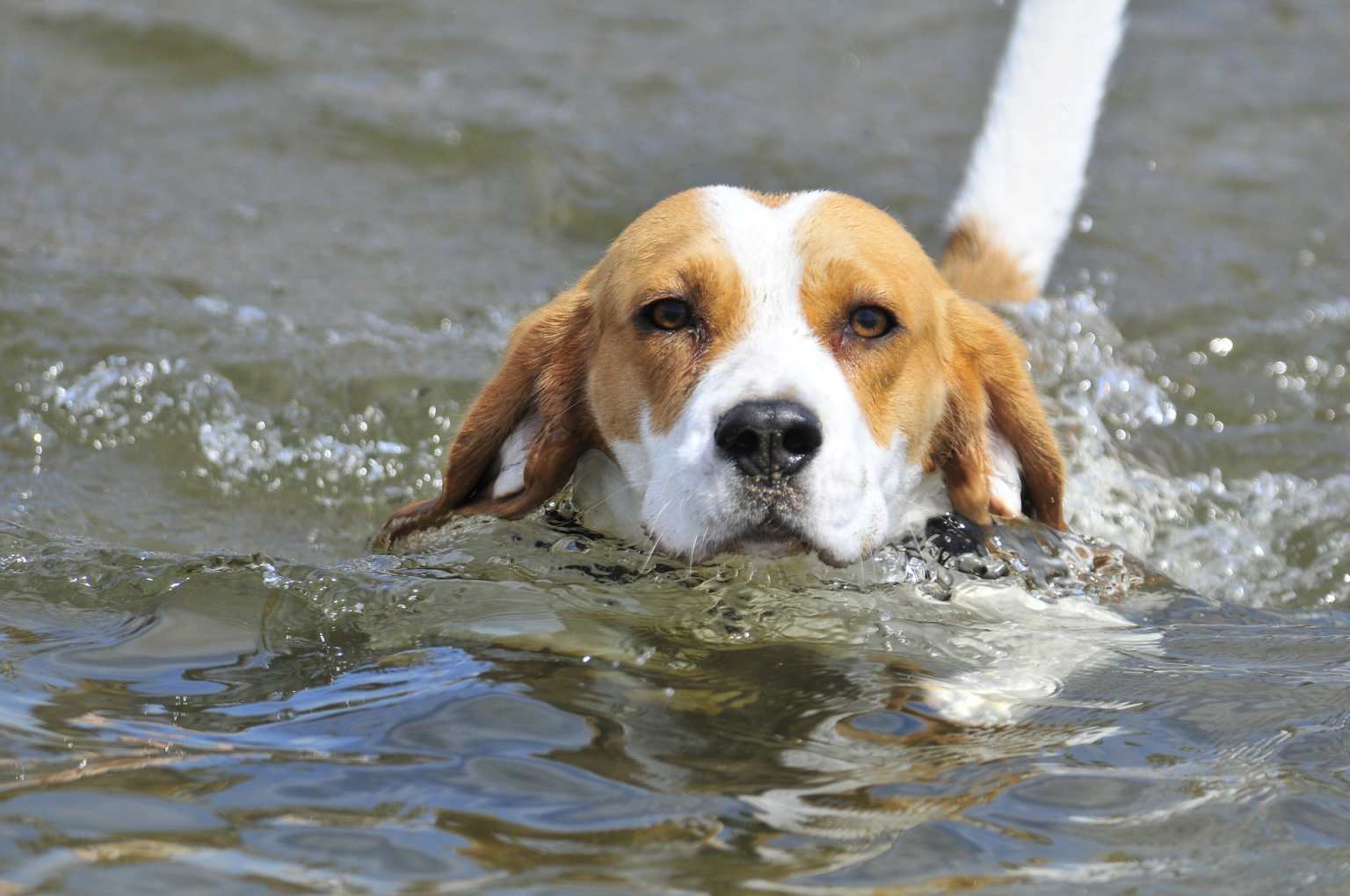
Travelling with your dog
Travelling and Driving With Your Dog Abroad: Advice for Dog Owners
We know it can be difficult to leave your dog at home while travelling abroad. With Eurocamp holidays, you don’t have to. We have a range of parcs and accommodation types suitable for families with dogs.
Read on to make sure you’re up-to-date on everything you need to know about travelling abroad with your dog.
Make sure your dog is healthy and fit to travel
You should plan for travelling with your dog well before the journey.
Think carefully about the type of journey it is and the effect that it will have on your dog, taking into account how big the animal is, its nature, and how long the journey is.
Consider carefully whether you can fully protect your pet’s welfare on the journey. If you’re unsure, it might be best to leave your dog behind.
Your dog should be healthy and fit for the intended journey. If necessary, ask your vet for advice beforehand. An animal is not normally fit for transport if it:
is ill or injured (except for minor illness or injury)
cannot feed itself and is not travelling with its mother
is heavily pregnant and likely to give birth during the journey
has given birth within the 48 hours before starting the journey
is newborn with an unhealed navel

You must also be able to prove that your dog is at least 12 weeks old to go on holiday with you.
This is because they need to have had a rabies vaccination prior to travelling, and this can’t be administered to puppies younger than 12 weeks old.
Dog travel checklist
As of 1st January 2021, pet passports issued in Great Britain are no longer valid for travel to an EU country. When travelling to an EU Country with your dog, you’ll need to obtain an Animal Health Certificate (AHC) signed by an official vet. This document is proof that your dog has been microchipped and vaccinated.
This checklist will help to ensure that your trip is safe and enjoyable for you and your furry friend:
Medication and Microchips
If your dog is receiving their primary rabies vaccination (or if their previous one has lapsed), you must wait 21 days after the injection before you can travel to the EU. However, if your dog is receiving a booster and their previous vaccination is still in date, there is no 21-day wait; you can obtain the AHC, and travel immediately.
Your dog should be microchipped prior to- or at the same time as their rabies vaccination. Make sure the vet puts the microchip number in your Animal Health Certificate.
You don’t need to get your dog microchipped if it has a clearly legible identification tattoo from before 3rd July 2011, your dog was vaccinated against rabies after it was tattooed and you’re travelling to the EU or Northern Ireland.
Within 24 to 120 hours (1-5 days) before your return trip to the UK, you'll need a vet to administer tapeworm treatment for your dog.
Documentation and Travel
To obtain the AHC, you must show a vet proof of your dog's microchip (which needs to be implanted prior to or at the same time as the vaccination) and their full rabies vaccination history.
You will need to get your AHC signed by an official vet no more than 10 days before you travel.
Ensure you are entering the EU and returning to the UK via an authorized 'Point of Entry' for pets, using a transport company that is permitted to carry animals. If you are traveling in your own vehicle, you must use an approved ferry or Eurotunnel route.
At the Parc
Accommodation: Make sure your accommodation is pet-friendly. At Eurocamp, we have a range of dog-friendly parcs. You can call our customer service team to book, on 01606 787 677.
Remember to bring along all the essential supplies you will need, such as food, water, bowls, a leash, collar, ID tags, medication, first aid kit, and poop bags.
It’s important to keep your dog comfortable and safe on your trip. You could provide them with a comfortable travel crate and bring along familiar items.
Ensure you’ve researched the regulations for pet ownership and travel in the country you’re holidaying. For example, some countries may require you to keep your dog on a lead whilst in public.
Travelling with your dog
Whilst overseas
Whilst almost all dogs that travel overseas experience no problems whatsoever, it’s worth remembering that, should you decide to take your dog out of the UK, it may be exposed to diseases which are not present in the UK.
As an example, there are some diseases transmitted by tick bites, and parasites such as heartworm and tapeworm. Your dog will have no natural immunity to such diseases and may therefore be more likely to succumb to them, but the steps above will help to minimise the risk.
We strongly recommend that you consult your vet about your dog’s fitness to travel before you take your dog abroad. Depending on where you are going, your vet may be able to advise you on preventative treatments, on any other precautions you need to take and how to look for signs of ill health in your dog.
In the very unlikely event that your dog shows signs of illness after returning from abroad, explain where it has been so that your vet can consider the possibility of an illness not normally found in the UK.
Remember though, thousands of dogs travel overseas every year without incident or illness.
Our dog-friendly parcs
We have over 280 dog-friendly parcs for you to choose from. Whether you choose a holiday home or a classic tent, your dog can join you from as little as £3 per night! Here are some of our top picks:

La Plage, South Brittany
Only 5km from Carnac's famous standing stones all 4000 of them!
Explore picturesque Auray
Take a boat trip around the islands of the Morbihan Gulf

Château La Forêt, Vendee
Strike out along the coastal footpaths
Explore seaside resorts like Saint-Gilles-Croix-de-Vie
Take a day out to the Ile de Noirmoutier

Le Vieux Port, Landes
Fabulous pool complex with pirate ship, wave pool and water slides
Great choice of on-parc activities, including cycle hire and horse riding
Head off-parc for a day at the Atlantic water park at nearby Seignosse
Everything else you need to know about travelling overseas with your dog
We know you might still have a few questions regarding taking your dog along with you on your holiday. We’ve put together some FAQs to help you make sure you and your furry friend can enjoy your trip away.
Do I need an animal health certificate if my dog has an EU passport?
If you’re travelling to an EU country or to Northern Ireland from Great Britain, you’ll need an Animal Health Certificate (AHC).
How much does it cost to get an Animal Health Certificate?
Costs vary depending on which veterinarian you’re using, but an AHC could cost from around £90 to £180 for the first pet, then around 25-50 per each additional pet. You can have up to 5 pets on one certificate.
Can I bring my dog on public transportation in the EU?
Dogs are mostly allowed on public transport throughout Europe. Whilst larger dogs might require a ticket for travel, smaller dogs which can fit into a bag might not require a ticket. It’s still worth checking the regulations of the country and city you’re visiting.
Please also note:
When you've picked your parc, please check which accommodation types are dog-friendly before you confirm
Dogs cannot be added online, so once you've booked your holiday, add your dog by calling our friendly contact centre team on 01606 787677
Only one dog can be added per booking
Dog charges are payable locally on some parcs
Dogs must be on a lead and supervised at all times on-parc
Parcs may ask for dog owners to have the vaccination record with them
Check the rules on local beaches as dogs may not be permitted
Advice accurate as of December 2023
Need further assistance?
Speak to our amazing holiday advisors and get travel advice tailored to you