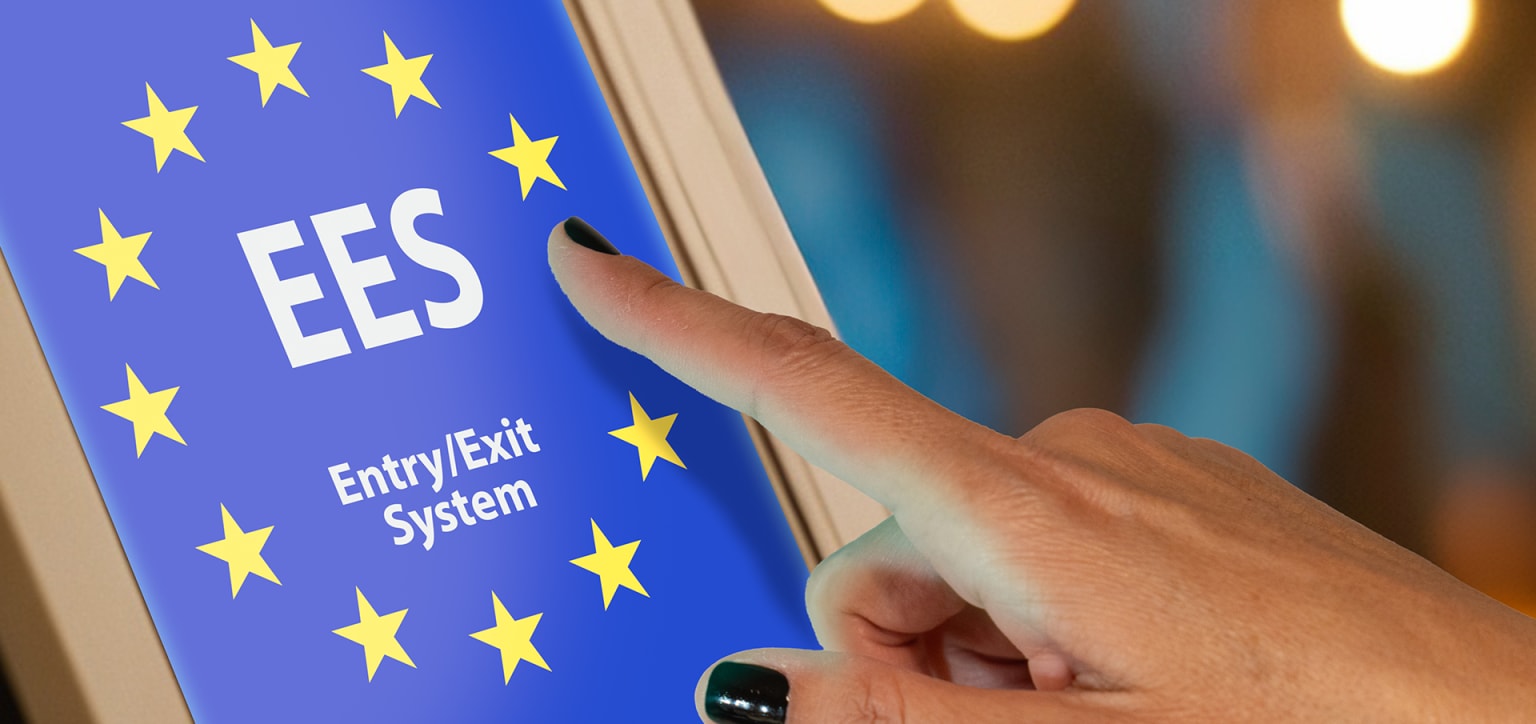
EES & ETIAS
The Eurocamp Guide to EES and ETIAS entry requirements
Travelling to Europe from the UK is changing, with two new EU-introduced systems designed to make border crossings safer and faster for all of us.
This guide explains what you need to know about the EU's Entry/Exit System (a digital border registration) and the European Travel Information and Authorisation System (an online pre-travel authorisation launching towards the end of 2026).

What is the EES?
The EES (EU Entry/Exit System) is a digital border registration that will log your trips electronically and replace manual passport stamping. It will use what’s called ‘biometrics’ - technology that scans our individual fingerprints and eye patterns - alongside a photograph (children under 12 won’t need to provide a fingerprint). It’s aimed to cut down on illegal travelling between countries.
When will it be introduced?
The EU will introduce the system from 12th October 2025. It’s expected to be fully rolled-out over a six month period.
Who does it apply to?
The new system will be used for all British and non-EU citizens travelling to a Schengen area country for short stays (up to 90 days within any 180-day period). For Eurocamp holidays, that means travel to Austria, Croatia, France, Germany, Italy, Luxembourg, Netherlands, Portugal, Spain and Switzerland.
Where will the checks take place?
The new system will operate when you enter the Schengen area (or if travelling by ferry from Dover, or Eurotunnel from Folkestone or St Pancras, this will take place before boarding in the UK).
Do I need to register in advance?
No advance registration is needed. Just make sure to bring a valid passport. The initial biometric collection will take a few minutes and you might be asked questions about the nature of your travel. Your EES record is valid for three years. If you return to a Schengen country again during this time, you’ll only need to scan your fingerprint or photo the following times.
Is there a cost?
No, there is no cost for a traveller for the registration; the system is completely free for travellers to use. Any requests for payment to comply with the EES (such as from a non-official site) are fraudulent.
Good to know
As this is a new system, we’d recommend factoring in small delays as it gets adopted in the various countries.
What is the ETIAS?
The ETIAS (European Travel Information and Authorisation System) is a new security requirement for UK holidaymakers visiting the Schengen Area. It will be a way to allow travellers from visa-exempt countries (which includes the UK) to visit countries in the Schengen Area for up to 90 days in any 180-day period.
When will it be introduced?
The ETIAS is an online, pre-travel authorisation, which will work alongside the EES system above. The EU is hoping to launch the system when the EES is fully implemented, so they’re expecting to start in late 2026.
Who does it apply to?
The ETIAS system applies to all UK passport holders. Every adult and child will require ETIAS unless they have EU residency or a long-term visa. There are exemptions from the fees for those under 18 or over 70, but everyone must still apply for it.
How can I apply for ETIAS?
As this is a digital-only system, application can only be completed online, via the official EU ETIAS website or app. But beware of unofficial sites charging extra fees. You’ll need a valid passport (machine-readable, valid for at least 3 months past your planned departure), email address, and a debit- or credit card for the approximate £17 fee (€20) per person.
How long is the ETIAS valid for?
Once approved, authorisation is sent by email and linked to the passport used for the application - and is good for three years from the date of authorisation, or until the passport expires.
Want to find out more?
There are plenty of websites set up to help you, we’d recommend the following as good places to start: