
Driving in France: rules, regulations and requirements
If you're considering hitting the road and driving to France, there are a few things you need to be prepared for and we're not talking about the endless chimes of 'Are we there yet?'' from the kids or getting used to driving on the wrong side of the road.
Read on to find out about the rules, regulations and requirements for driving in France. We'll share with you the practical aspects of navigating the French roads so you can spend less time worrying about the rules and more time enjoying the things that matter.
The basics
To drive in France, you must
Be over 18
Hold a full, valid UK driving licence
Be able to present your V5 registration document
Be able to present proof of ID
Have a valid UK sticker on your vehicle
Page content
Documents, licence and permits
To make sure you're complying with the law in France, make sure, when driving, that you always have the following items with you.
Minimum driving age
In France, you need to be 18 or older to drive. This depends upon which vehicle you're driving.
For cars and a motorcycles over 125cc, the minimum age is 18.
For motorcycles under 125cc, the age is 15.
There are also strict rules regarding alcohol levels within the first 3 years of having passed your test. Within the first 3 years of driving, the blood alcohol limit is just 0.2g per litre.
Driving with children and babies
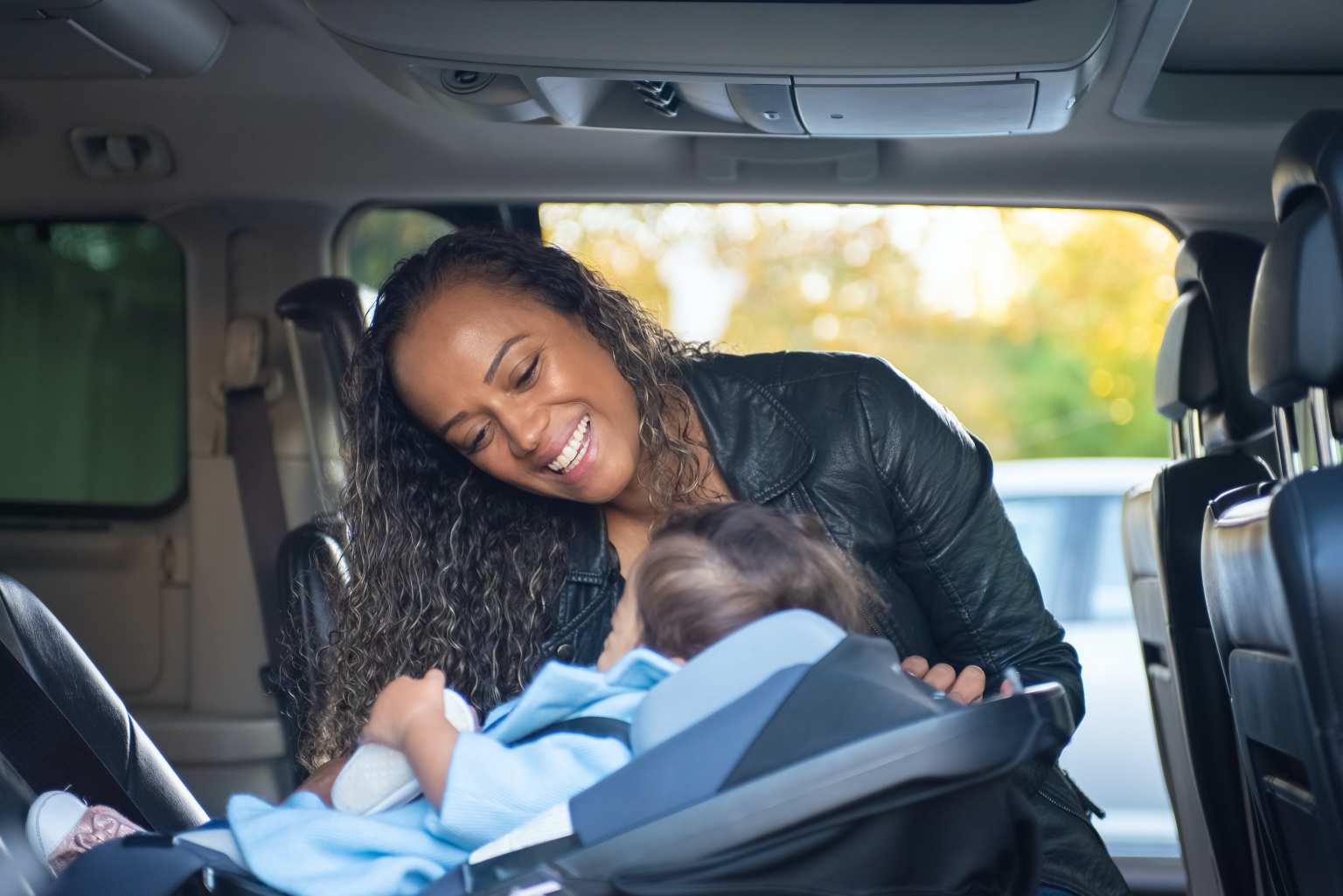
In France, the driver is responsible for ensuring that passengers under 18 are restrained in the appropriate manner.
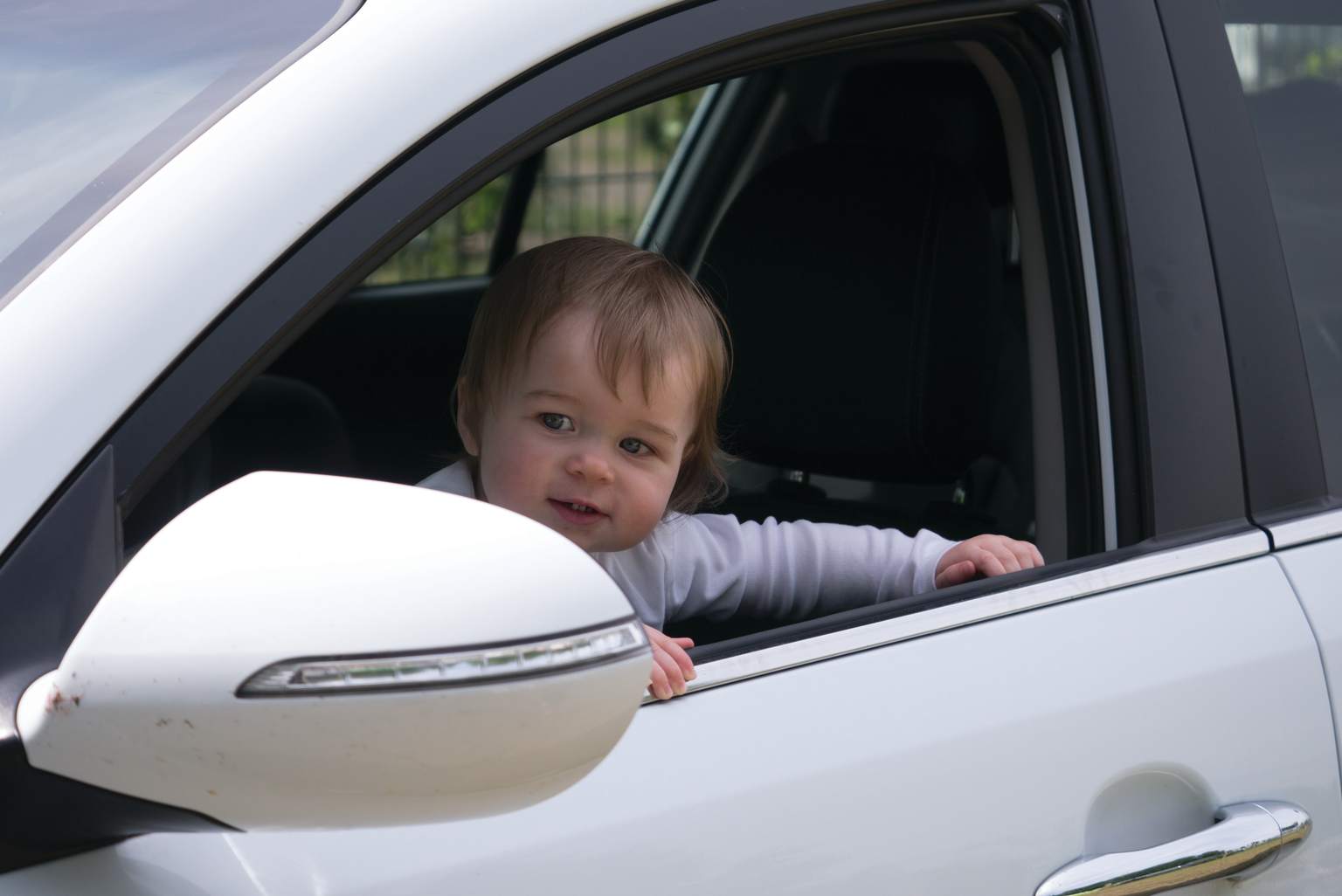
All infants under 10 must travel in a seat designed for their age, weight and body type.
They must be wearing an approved seat belt, and can be seated only one child per seat.
Children under 10 must not be transported in the front seat of your vehicle except for during the following circumstances:
- You're transporting a baby in the front of the vehicle in a rear-facing car seat, and the passenger airbag is deactivated
- The vehicle does not have a rear seat.
- The vehicle does not have rear seat belts, or these are damaged beyond use.
- The rear seats are temporarily unusable
- All of the rear seats are already occupied by children under 10 years of age who are properly restrained.
Failure to comply with these regulations may result in a fine provided for 4th class contraventions - typically €135.
Car seat rules
As advised, children up to the age of 10 are required to travel in a seat adapted to their age and size. What does this mean for your family?
Children up to 83cm (from birth to approx. 15 months old, or 10kg)
Your baby's car seat must be rear-facing and should ideally be on one of the back seats. It should be secured with the seat belt as indicated by the manufacturer's instructions. If the seat is rear-facing in the front of your vehicle, the airbag must be deactivated.
Children up to 1 meter (approx. 9 to 18kg)
The child can be seated at the rear of your vehicle in a seat with a 5-point harness or a protection tray.
Children up to 1.5m (up to 10 years)
The child should be seated in the rear of the vehicle on a booster seat with a backrest.
Children above 18kg
The child can be seated in the front or rear of the vehicle on a booster seat or cushion and should use a normal seat belt.
Children up to 1.5m (up to 10 years)
The child should be seated in the rear of the vehicle on a booster seat with a backrest.
Taxi drivers transporting a child are exempt from using a suitable car seat due to insufficient space to transport the seat. Where possible, children should wear a seat belt.
Driving in France kit
There are a few must-have items for driving in France, as well as a few recommended items. Aside from the documents and stickers we already mentioned, here's a list of everything you'll need to take in your car:
A warning triangle
These are compulsory in vehicles with 4 or more wheels and you risk being fined €135 if you don't have one
Reflective hi-vis jackets
You'll need one of these for each passenger and could be fined €135 for each missing item. The safety vest must be fluorescent, easy to reach, and be marked with 'EC' for 'European Compliance'.
Headlamp beam deflectors
Unless your beam can be manually adjusted, you'll need headlight converters to avoid dazzling oncoming traffic on the right.
Snow tyres or chains
If you're in a snow zone between 1st November and 31st March, you'll need to fit either winter tyres or snow chains to your vehicle. This affects you if you're driving to Le Belledonne Campsite.
Drivers are prohibited from using devices capable of detecting speed cameras and warning drivers of their location. Ensure that any such mobile phone app- and sat-nav capabilities are disabled.
We also recommend the following items:
A spare bulb kit
In France, it's illegal to drive if one of your important bulbs has gone, so it's worth carrying a spare bulb kit in case of any outages.
Breathalysers
France removed the legal requirement to carry these in your car back in 2020, however, given that the blood alcohol limit is 50mg of alcohol in 100ml, you might want to take these if you're planning a vineyard tour or wine-tasting session.
A spare tyre
In France, drivers are prohibited from driving with tyres in a poor condition. We therefore recommend taking a spare wheel on your travels.
Why not try an on-parc vineyard?
Once you've traversed the charming French countryside and settled into your holiday parc, there shouldn't be anything stopping you from enjoying everything that France has to offer.
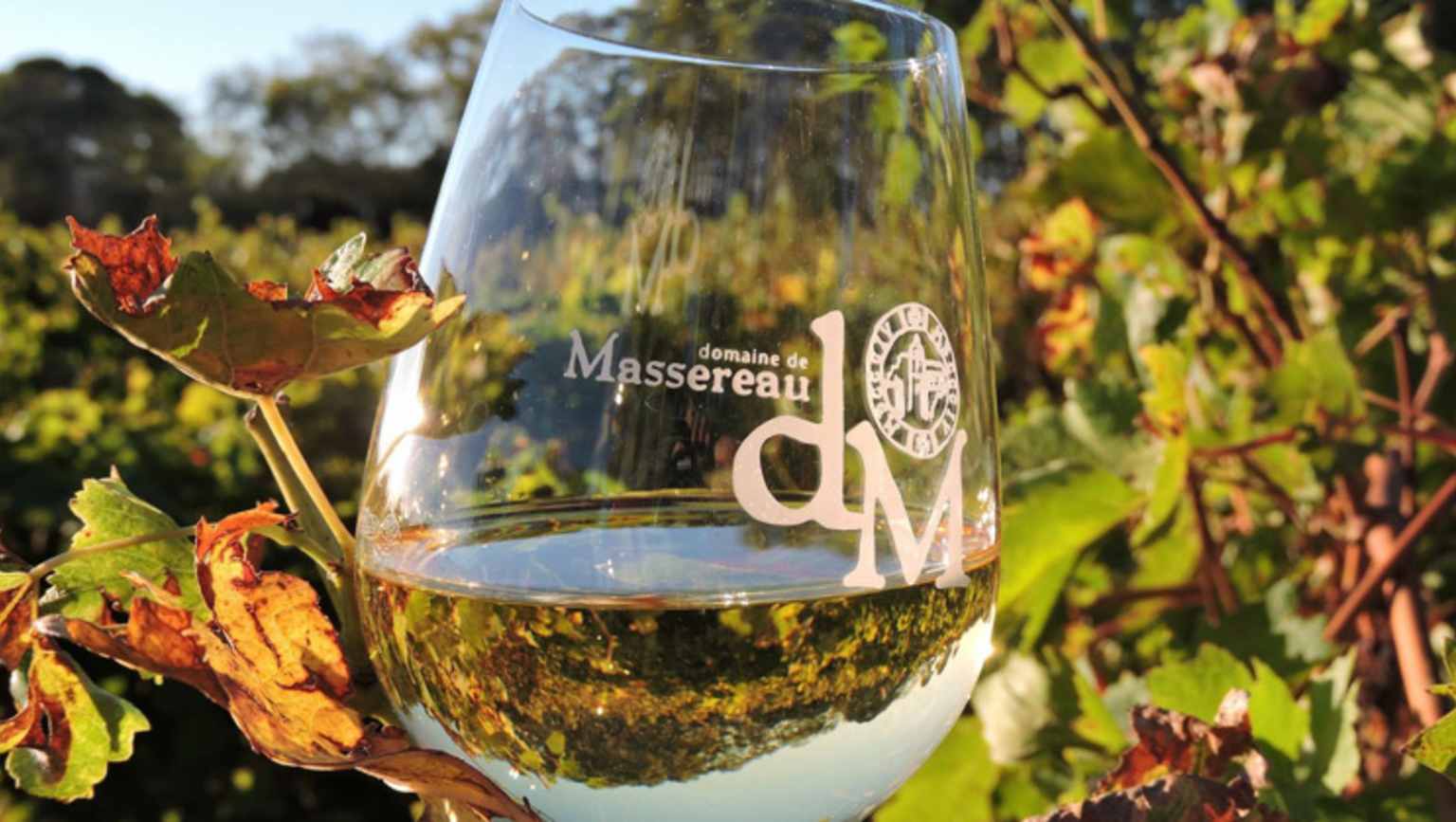
Yes, there are strict rules regarding alcohol and driving, however, you can actually savour a wine tour and -tasting from either of the following two parcs. You'll be able to stroll to your destination rather than worry about driving and breathalysing.

Rules of the road
It's definitely worth familiarising yourself with some of France's driving laws and restrictions prior to making your trip. You should know, for example, that it's the responsibility of the driver to ensure everyone under the age of 18 is wearing their seatbelt.
What side of the road do you drive on in France?
In France, cars drive on the right-hand side of the road, which means that you'll need to overtake on the left.
What are the speed limits?
Speed limits in France vary depending on the weather and visibility, so make sure you're aware of restrictions to avoid any spot fines - these can range from 68€ to 1,500€.

In normal weather
Motorways: 130 kmph
Dual carriageways with a central reservation: 110 kmph
Roads with at least two lanes in the same direction of travel: 90 kmph
Dual carriageways without a central reservation: 80 kmph
Urban areas: 50 kmph
In the rain or when wet
Motorways: 110 kmph
Dual carriageways with a central reservation: 100 kmph
Roads with at least two lanes in the same direction of travel: 80 kmph
Dual carriageways without a central reservation: 80 kmph
Urban areas: 50 kmph
In low visibility
In visibility under 50 metres, the speed limit is reduced to 50 kmph on all roads, however local authorities may further reduce these speeds.
You can find out more about speed limits in France at service-public.fr.
Right of way and priority
Emergency service vehicles have priority over other road users.
It's compulsory to give way to traffic on the right at all intersections unless there is a sign advising otherwise.
Priorité à droite, meaning priority from the right, is a French driving rule, which gives right of way to cars entering the road from the right.
As in the UK, you must give way to traffic already on a roundabout (in this case, said road users will be to your left).
What is priorité à droite?
This is a rule in France, indicating priority from the right. Whilst this driving rule is no longer as common a feature as it once was, it's still worth observing.
The rule means that a vehicle approaching from the right at an intersection has priority over the one approaching from the left. Though priorité à droite isn't quite as common as it used to be, it's still assumed in rural areas.
Failing to comply could lead to a fine of up to 135€.
Right of way road signs
There are some exceptions to priorité à droite that you should be aware of. Take a look at the signs below to learn more.
You have priority

This sign indicates the start of a priority road. You'll have right of way until you see the same sign with a black line through it.

This sign also indicates that you have right of way. It signifies a junction ahead, where you have priority over drivers crossing your path.
Oncoming traffic has priority

This sign indicates that you're coming up to a junction and need to give way. It is not always accompanied by the text Cédez le passage.

This road sign indicates that there is a junction ahead and that you don’t have priority over traffic coming from the right.
Alerting and warning other drivers
Whilst driving in France, you're permitted to alert other drivers as to your presence or to immediate danger. This can be done with your horn or lights, depending on where you are and the time of day.
Flashing your lights
Lighthouse calling
Lighthouse calling, the act of intermittently turning your dipped- or main beams on and off, is permitted.
At night
Use your headlights to alert other drivers, as use of your horn at night is only permitted when absolutely necessary.
Using your horn
In built up areas:
You may only use your horn in the case of immediate danger
Outside built up areas during the day:
During the day, you can use your horn to give necessary warnings to other road users (for example, when approaching a blind turn)
Outside built up areas at night:
At night time, you should warn other drivers with your headlights. You should only use your horn if absolutely necessary.
Abusing these regulations can lead to a fine of 35€ to 150€.
Food & Drink
Post-Brexit, things look a lot different bringing foods into the EU from the UK. Pay attention to the following information - if you bring a cheese and ham sandwich with you, it may well get confiscated. To help you out, we've got a list of what you can and cannot bring with you driving into France.
Food and Duty-Free
Meat
Dairy products
Most fruits
Most vegetables
Fish
20 kg or 1 fish (whichever weighs most)
Eggs
Limited to 2kg
Honey
Limited to 2kg
Cigarettes
Up to 200
Alcohol
A maximum of 1 litre of spirits
Exceptions
Powdered infant milk, infant food and special foods required for medical reasons
No more than 2kg. These must be products which:
do not require refrigeration before opening
are packaged proprietary brand products for direct sale to the final consumer
that the packaging is unbroken unless in current use
Pet food required for health-related reasons
No more than 2kg. These must be:
intended for the pet accompanying the passenger
shelf-stable (do not require refrigeration)
packaged proprietary brand products for direct sale to the final consumer
in unbroken packaging (unless in current use)
Alcohol
The drink-driving limit in France is 50mg of alcohol in 100ml of blood. This is equivalent to 0.25 mg alcohol per litre of breath.
You may be fined anywhere between 135€ and 750€ for blood alcohol levels between 0.5 and 0.8 g/l.

Under no circumstances
Finally, there a few things you need to be aware of when driving around France.
- You mustn't use your mobile telephone whilst driving (even via a hands-free system)
- You mustn't use anything in or on your vehicle which warns you of the location of speed cameras - so turn off this function on your phone or sat nav
- You mustn't wear headsets or headphones whilst driving
Motorcycle helmets with an integrated intercom are permitted if you're driving a motorbike
Discover France
There's plenty to do in France, whether you're visiting theme parks or taking in the beautiful landmarks and sights! Now that you know the ins and outs of Crit'Air, here are some of our top picks:
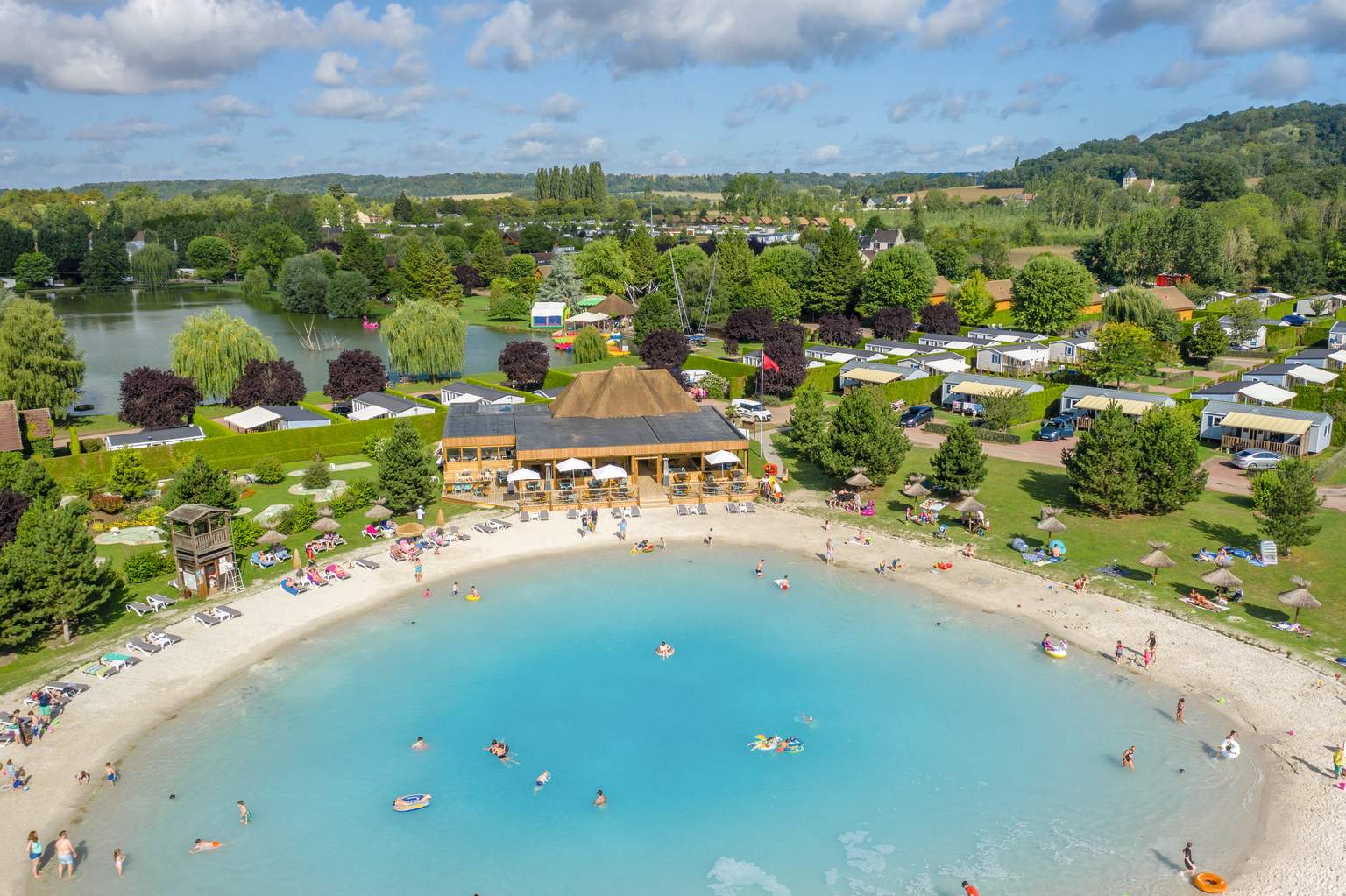
La Croix du Vieux Pont
Perfect for a day trip to Disneyland®
Thrilling new water slides
Relaxing beach bar terrace

Domaine des Ormes
Close to Mont St Michel
High wire adventure course
Enjoy horse riding or the 18 hole golf course

L’Océano d’Or
Relax in the aquatic complex
Close to a lovely Brittany coastal resort
Try one of the many on-parc activities


Further Reading
Snow Zones in France
Driving in the EU (gov.uk)
Advice accurate as of January 2024
Need further assistance?
Speak to our amazing holiday advisors and get travel advice tailored to you